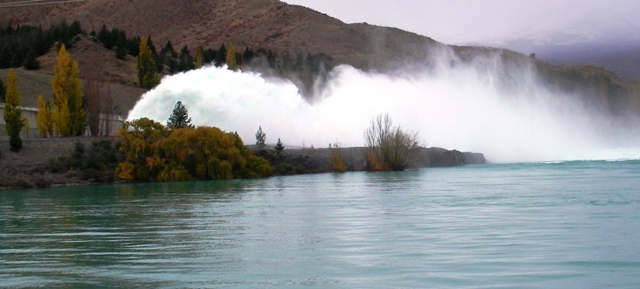
Biggest Earth Dam
See our coach?
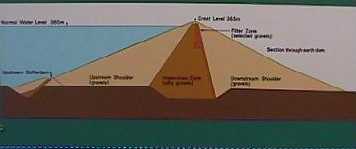
Earth Dam Profile
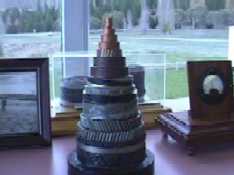
Submarine Cable
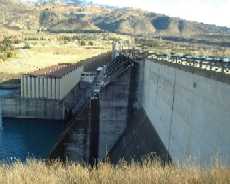
Concrete Dams
Other energy sources
The North Island's need is much greater and cannot rely entirely on the submarine
cable and hydro power availability. from the South Island generators. Groups travelling in
the North Island can view plants that generate power from geothermal steam, coal,
natural gas and wind. As oil is expensive it is only used when
hydro systems are short of water.
Education
Centre
KANES
arrange for talks and further studies for groups with special interests in
these studies.
See
Also:-
Rivers
Engineering
LINK Benmore Power
project |
Interested groups explore New Zealand's biggest schemes involving dams,
canals, storage, generation and transportation of power.
Non
polluting, renewable hydropower is a major asset for New Zealand. Three of
New Zealand's largest rivers generate more than 70% of the country's power.
and they contribute to the scenic and recreational pleasure for visitors and
locals.
As the highest demand for electricity
comes from the North Island
where 75% of the people live and most of the Hydro Power is generated in the
South Island because of its larger mountains, lakes, rivers and gorges a
long transmission supply is part of the project.
Action
Education
KANES groups can visit New Zealand's largest scheme for better
appreciation of the various aspects.
We can learn about the physics, engineering, electricity generation,
electricity distribution systems. We see environmental
considerations, recreation and irrigation advantages etc
Dams
We look at both concrete and earth dams and see the advantages and applications of
each. You can follow the techniques and considerations of building one of these.
Canals
We see how these are constructed how water moves and how they cope with floods and
flow variations.
Environmental Impact
We look at the losses of land and irrigation resources to be balanced by
the advantages of power.
Maintaining supply
Water is needed to flow to meet a varying demand, the supply rate of water depends
on the season and the rain fall in the distant mountains. We see how the supply vs
demand differences are solved.
Maintenance of schemes
Interested groups are able to gain an appreciation of the aspects that need to be
replaced and repaired periodically.
Systems of converting
water into energy
There are developing techniques for building water engines. Interested groups
can see some of these applications.
Transportation of
electricity
Because of the distance, terrain and human resistance to power transmission we see
these and discuss the many considerations involved.
Related Studies
You can extend your learning to weather, tectonics, rivers,
engineering, and physics as they are all closely associated with HEP generation.
|
 New Zealand Student Tours